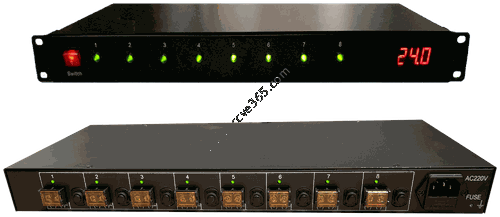
Rack-Mount Power Distribution
Centralized power for security and surveillance systems
Standard 19-inch 1U and 2U chassis, independent output channels with a fuse on every channel, and six output-voltage classes — DC5V, DC12V, DC24V, DC36V, DC48V and AC24V — engineered to replace scattered individual power adapters in equipment racks.
69
power products in the catalogue
6
output voltage classes
8–32
output channels per unit
1U / 2U
19-inch rack formats
Power supplies by voltage class
Choose the class that matches the nameplate rating of the front-end devices. Voltage classes must never be mixed on the same load.
DC12V
DC12V — cameras and 12 V devices
28 modelsAC24V
AC24V — PTZ domes and pan-tilt units
14 modelsDC24V
DC24V — 24 V DC equipment
12 modelsDC36V
DC36V — PTZ speed domes
4 modelsDC48V
DC48V — PoE switches and telecom
1 modelDC5V
DC5V — routers and transceivers
1 modelOther
Converters and custom builds
9 modelsSelected models
Representative units across the range. Every model page lists the full specification table.


DC48V rack-mount
DC48V 16-Channel Rack-Mount Centralized Power Supply
DC48V · DC48V, factory-set, adjustable ±10% · 16 channels

How these supplies are built
Design points that come up most often in project specifications.
01
One fuse per channel
Each output has its own fuse — PTC self-resetting on most models — so a fault on one channel does not take down the others.02
Independent channel switching
Per-channel switches and status LEDs let you isolate or service a single device without interrupting the rest of the rack.03
Front and rear cable entry
Both panels accept wiring on most models, so units can be wired in place without pulling them out of the rack.04
Adjustable DC output
DC models carry an internal VR potentiometer for ±10% adjustment, used to compensate voltage drop on long cable runs.Selection guidance
Technical notes on voltage, channel count, power headroom and 1U/2U mounting.
Selection guide
How to select a rack-mount power supply: channel count, voltage, and power explained
Voltage by load device · channel count by device count · 20–30% power headroom · 1U vs 2U.
Specification note
Engineering estimates and datasheets
Values marked “approx.” or “est.” in the specification tables are engineering estimates. The physical datasheet governs for ordering.
Custom builds
Voltage, channel count and control options
Output voltages, mixed-voltage groups, network control and sequential switching are configurable on request. Lead time applies.
Need a model matched to your project?
Send the voltage class, device count and total load — we will confirm the model and the power headroom.